
You are using an out of date browser. It may not display this or other websites correctly.
You should upgrade or use an alternative browser.
You should upgrade or use an alternative browser.
What's a "2 step"?
- Thread starter restoguy
- Start date


the baPhoon
Active member

Flyin Ryan
hated cuz he drives fords
Re: What's a "2 step"?
You set an RPM that you want to launch from, the rev limiter is adjusted to this RPM, it flutters the RPM as if your hitting the rev limiter but it's at the RPM you set so you build boost.
It gives you more control over what RPM and what Boost you launch at each time and can make for a very consistent launch.
Some argue the point that your loading up the drive train so when you launch there isn't as much shock to the drive line parts so it's less chance of something letting go but I can't comment on whether or not I agree
You set an RPM that you want to launch from, the rev limiter is adjusted to this RPM, it flutters the RPM as if your hitting the rev limiter but it's at the RPM you set so you build boost.
It gives you more control over what RPM and what Boost you launch at each time and can make for a very consistent launch.
Some argue the point that your loading up the drive train so when you launch there isn't as much shock to the drive line parts so it's less chance of something letting go but I can't comment on whether or not I agree


restoguy
New member
Re: What's a "2 step"?
Explain this to me. Your foot is still on the brake, right? It just holds a certain RPM for a more consistent launch with less wheel spin. Wouldn't it be the same as doing it 'the old fashioned way' with better driver control?
I'm familiar with a 2 stage rev-limiter, just never heard it called a 2-step before I guess. I used to own a Soft Touch MSD, but never got to use it.(don't remember if it was 2 stage or not) Sold the car when I got the Ty!
It doesn't add as much heat to the transmission fluid vs power braking.
Explain this to me. Your foot is still on the brake, right? It just holds a certain RPM for a more consistent launch with less wheel spin. Wouldn't it be the same as doing it 'the old fashioned way' with better driver control?
I'm familiar with a 2 stage rev-limiter, just never heard it called a 2-step before I guess. I used to own a Soft Touch MSD, but never got to use it.(don't remember if it was 2 stage or not) Sold the car when I got the Ty!

Windedv6
Ty n 10s
Re: What's a "2 step"?
This depends where you set the "2 step rpm" in relationship to the stall rpm of the converter. NA motors typicaly set it a 200 -500 rpm below the convertors stall rpm so there is a flash or hit on the converter when the brake or transbrake is released. This flash is somewhat similar to "dumping the clutch" to start building momention as the rpms come up on the convertors stall point. Using the "2 step in this setup (extra slippage prior to brake release) allows the convertor to run a little cooler as the convertor is not lighten up which allows more fluid to pass through.
Many turbo cars set the "2 setup limiter" at or slightly above the stall rpm of the converter which greatly increases the spool time as the motor is loaded harder. As the turbo builds boost and increases hp, the natural stall rpm of the convertor will rise and bump into the "2 step setting" thus limiting the rpm to rise further and steading launch rpm. This adds heat to the convertor like power braking as the convertor is tight and has a lot of resistance for the fluid.
There is a trade off to using the flash up method vs the setting the "2 step" against the stall of the convertor. Flashing the convertor by setting the "2 step" under the convertor's stall speed spools slower and taking longer will also cause heat build up. Setting the "2 step" against the convertors stall point (or above) may alllow a turbo spool very quickly and actually not heat up the fluid as much. Which method to use depends on your setup and use.
John
It doesn't add as much heat to the transmission fluid vs power braking.
This depends where you set the "2 step rpm" in relationship to the stall rpm of the converter. NA motors typicaly set it a 200 -500 rpm below the convertors stall rpm so there is a flash or hit on the converter when the brake or transbrake is released. This flash is somewhat similar to "dumping the clutch" to start building momention as the rpms come up on the convertors stall point. Using the "2 step in this setup (extra slippage prior to brake release) allows the convertor to run a little cooler as the convertor is not lighten up which allows more fluid to pass through.
Many turbo cars set the "2 setup limiter" at or slightly above the stall rpm of the converter which greatly increases the spool time as the motor is loaded harder. As the turbo builds boost and increases hp, the natural stall rpm of the convertor will rise and bump into the "2 step setting" thus limiting the rpm to rise further and steading launch rpm. This adds heat to the convertor like power braking as the convertor is tight and has a lot of resistance for the fluid.
There is a trade off to using the flash up method vs the setting the "2 step" against the stall of the convertor. Flashing the convertor by setting the "2 step" under the convertor's stall speed spools slower and taking longer will also cause heat build up. Setting the "2 step" against the convertors stall point (or above) may alllow a turbo spool very quickly and actually not heat up the fluid as much. Which method to use depends on your setup and use.
John

Slyclone
Well-known member

upside
clapped out
Re: What's a "2 step"?
yes you will still have to hold the brake down. with the two step wired to your brake light it will engage when the brake is applied, with the brake held firmly down and the 2 step activated you now can apply WOT and your engine will build rpm to your desired setting.
now as the light drops your foot is on the brake preventing the car from moving forward and the accelerator pedal mashed down at WOT and the rpms sitting at lets say 3500 all you have to do on green is let go of the brake and your gone.
it takes out the factor of trying to feather your throttle at the desired rpm range and timing up the release of your foot brake and mashing the gas pedal down at the same time.
Explain this to me. Your foot is still on the brake, right? It just holds a certain RPM for a more consistent launch with less wheel spin. Wouldn't it be the same as doing it 'the old fashioned way' with better driver control?
I'm familiar with a 2 stage rev-limiter, just never heard it called a 2-step before I guess. I used to own a Soft Touch MSD, but never got to use it.(don't remember if it was 2 stage or not) Sold the car when I got the Ty!
yes you will still have to hold the brake down. with the two step wired to your brake light it will engage when the brake is applied, with the brake held firmly down and the 2 step activated you now can apply WOT and your engine will build rpm to your desired setting.
now as the light drops your foot is on the brake preventing the car from moving forward and the accelerator pedal mashed down at WOT and the rpms sitting at lets say 3500 all you have to do on green is let go of the brake and your gone.
it takes out the factor of trying to feather your throttle at the desired rpm range and timing up the release of your foot brake and mashing the gas pedal down at the same time.

bezerk
New member
Re: What's a "2 step"?
ihad mine setup like that, but i felt it was laggy, tried to do it myselve with a button and was even more laggy.
yes you will still have to hold the brake down. with the two step wired to your brake light it will engage when the brake is applied, with the brake held firmly down and the 2 step activated you now can apply WOT and your engine will build rpm to your desired setting.
now as the light drops your foot is on the brake preventing the car from moving forward and the accelerator pedal mashed down at WOT and the rpms sitting at lets say 3500 all you have to do on green is let go of the brake and your gone.
it takes out the factor of trying to feather your throttle at the desired rpm range and timing up the release of your foot brake and mashing the gas pedal down at the same time.
ihad mine setup like that, but i felt it was laggy, tried to do it myselve with a button and was even more laggy.

spooldup
Super Member
Re: What's a "2 step"?
This is a 2 step,
http://www.youtube.com/watch?v=NPCWHHdOFjQ&feature=youtube_gdata_player
This is a 2 step,
http://www.youtube.com/watch?v=NPCWHHdOFjQ&feature=youtube_gdata_player
restoguy
New member
Re: What's a "2 step"?
Haha, I'm thinking like the new stuff where the cruise goes through the computer. I guess it's a seperate electronic that is spliced in however the owner chooses. What do most syty guys use? Seems like it would help you lauch better.
How did you solve the 'laggy'ness, Bezerk?
Sweet! Is that a function of Code59? I love stuff that is pusedo-original looking-ish...
Haha, I'm thinking like the new stuff where the cruise goes through the computer. I guess it's a seperate electronic that is spliced in however the owner chooses. What do most syty guys use? Seems like it would help you lauch better.
How did you solve the 'laggy'ness, Bezerk?

Sean Krupa
Moderator
Re: What's a "2 step"?
I would also like to know what most guys use to Activate the 2step. This will be one of my Mods this winter. Going to use the MSD 6al2. Trying to figure out an activation method for it.
The Cruise Control switch seems cool like what Randy Merritt did.
http://www.syty.net/forums/showthread.php?t=86898
I would also like to know what most guys use to Activate the 2step. This will be one of my Mods this winter. Going to use the MSD 6al2. Trying to figure out an activation method for it.
The Cruise Control switch seems cool like what Randy Merritt did.
http://www.syty.net/forums/showthread.php?t=86898

midnightbluS10
Banned
Re: What's a "2 step"?
For future reference, you can search other places besides syty.net. I like to use google. YMMV
http://www.enginebasics.com/EFI Tuning/2step rev limiter.html
I have seen it mentioned a couple times, and I tried to search it but the search only returns 'step' so I didn't have much luck. Thanks for putting up with my flat-ish learning curve!
For future reference, you can search other places besides syty.net. I like to use google. YMMV
http://www.enginebasics.com/EFI Tuning/2step rev limiter.html
What is a 2 step rev limiter?
For short, most people just call it “two step”, but it is exactly as the name implies, it is a rev limiter that instead of just one setting, has two settings that are stepped one after the other. Most OEM manufacturers today have a stock rev limiter that has just one RPM (revolutions per minute) setting to it. Meaning that is it not stepped, but instead just one RPM setting that when hit, is just held there. This is what most of know as The Rev Limiter. With a two step limiter though, you have two rev limiters that are each set with there own parameters. For example you could have a rev limiter set up at 4200 RPM and another at 6500 RPM.
***NOTE ---->2step is not anti-lag. This is said time and time again, and it is a common misconception. While 2step does build boost on the line, it is different from anti-lag.
How does the limiter work?
A rev limiter works by either retarding the timing or cutting the fuel to the motors cylinders. Most tuners will refer to rev limiters in two ways. One is called a “soft cut” rev limiter and a “hard cut” rev limiter. On a soft cut limiter the timing is retarded to the point that the motor can no longer rev higher. This is called a soft cut since the motor slowly starts to loose power, and will not continue to rev higher. The other is called a “hard cut” rev limiter. This type of rev limiter is set up to not only retard the timing, but also cut the fuel to the cylinders. When the fuel is cut to the cylinders it causes a very abrupt cut to the revving of the motor, hence it is called a HARD CUT rev limiter.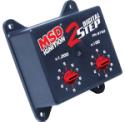
How to set up a 2 step rev limiter
Most of this section will depend on the parameters your particular ECU allows you to change and modify. We will have to speak very generally then in this section in hopes of helping everyone with their particular ECU. The parameters that usually you can control with a rev limiter are:
1. Target RPM
2. Fuel Cut RPM
3. Ignition Cut RPM
4. Rev Retard RPM
5. Vehicle Speed Sensor (VSS) MAX
6. Boost Pressure Max
These are the most common parameters but as said above, each ECU will be different.
Here is the 2step set up for an AEM ECU
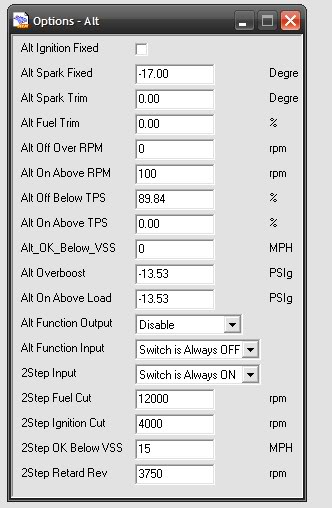
Setting up a 2 step rev limiter for a Naturally Aspirated (N/A) engine
If setting up a 2 step rev limiter on a n/a motor it is usually just for one thing, and that is consistency. A 2 step rev limiter is a great thing for those with a manual transmission that want to improve there launching with the car. Anytime you can decrease the number of variables to something, you will gain consistency. Consistency is very important when trying to get a high power car out of “the hole” in drag racing. You essentially can set the rev limiter to hold an RPM on the line so you don’t have to be worried about what your right foot is doing. You can just plant it to the floor and worry more about engaging the clutch smoothly and launching the car successfully. With a N/A application, all you need to worry about settings it the target RPM, Fuel Cut RPM, Ignition Cut RPM, and the VSS max. Below in the article, I will talk about how you go about choosing the ideal settings for each of these parameters.
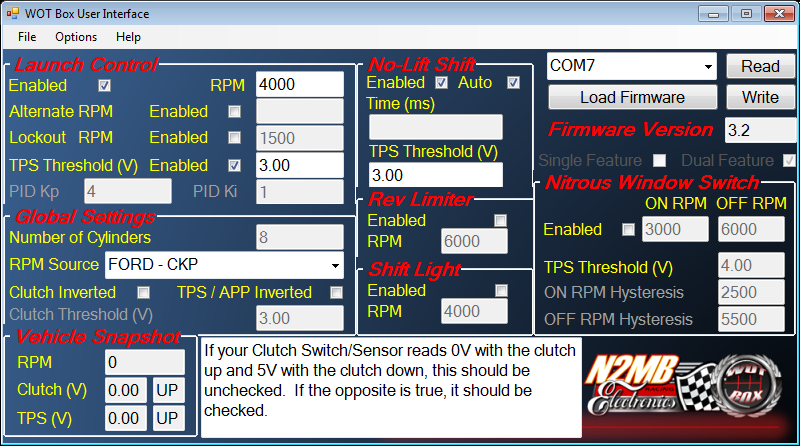
Setting up a 2 step rev limiter for a Turbocharged engine
This is where a 2-step rev limiter can REALLY SHINE. Improving your cars 60 ft, and 0-60 times can improve in ways you never thought possible just by setting up 2 step. The reason why is that you can build boost pressure on the starting line, with no load on the motor, by setting up the 2 step limiter with the right parameters. While gaining boost on the line is a plus, you also gain all of the same consistency and simplicity things that we discussed above in the N/A section.
How does the 2step rev limiter build boost with no load
What two step gives you the ability to do, is retard the ignition at a certain RPM to keep the motor from revving higher in the RPM range. By retarding the ignition at a specific engine RPM, we cause the combustion to occur later in the engines cycle. If your not super familiar with a 4 stroke motors cycle be sure to check our article here to help you with this explanation.
With the ignition retarded, and the combustion lagged, the exhaust gas temps ( EGT’s) will sky rocket, and the manifold pressure will shoot up. There will now be a higher manifold pressure and temperature in the exhaust manifold that usually can only be found when the car is under load or at a higher RPM. This increased manifold pressure in-turn will spin the turbine and give the engine boost pressure usually never seen on the starting line. As the timing is retarded even further in the combustion cycle process, the exhaust valve will open and combustion of the gas and air may even occur in the exhaust manifold itself, causing pressure and heat to increase even further in exhaust manifold and build even more boost pressure. This is why when you engage the 2step rev limiter on a boosted car it becomes EXTREMLY LOUD and you hear all of the back firing. Backfiring is when a car doesn’t burn all of its fuel in the combustion process, and then combusts in the exhaust system. The important parameters when setting up a boosted application will be usually ALL OF THEM.
How to actually set up the 2 step rev limiter
Unfortunately there is no magic number for every car, and every set-up, because there are so many variables. The goal though is the same. Get the car to have the fastest 60 ft. or 0-60 time that we can. To do this there will be a balance between making great power, and not having the tires slip. Sure we could bounce the car off of the stock rev limiter and drop the clutch, but this is just going to wash the tires and give us a terrible launch. Our goal is to set up our two step to not have this happen but to have a strong controlled launch every time. For an interesting article on tire contact patch to help you with traction, follow this link.
For N/A Cars 2 step
Pick an RPM where you believe your motor makes peak torque. Next set the fuel cut and ignition cut to be the same RPM. Then set the VSS speed to be the speed that you want this rev limiter to stop limiting the motor and let the car rev all the way up. For tips on what to set the VSS to read the steps for the boosted applications below as it will be the same.
Steps for turbocharged cars and 2 step
Step 1: For now, pick an RPM where your motor makes its peak torque.
Step2: Based on the RPM you chose set the fuel cut to an astronomical level so the fuel cut never steps in. On my personal car I have the 2step rev limiter set to 4200 RPM, the main limiter set to 6800 RPM, and the fuel cut set to 10,000 RPM so it never engages.
Step 3: Set the ignition retard rev to a few hundred RPM less than your desired RPM to start with. Meaning if you set your rev limiter to 4200 like I did, then set your ignition retard rev to 3900. Meaning that when the engine gets to 3900 it will start to retard the ignition.
Step 4: Set your VSS to a low speed like 2-3 mph for right now. This way the 2step rev limiter will turn off and let you rev all the way out once you reach that speed.
midnightbluS10
Banned
Re: What's a "2 step"?
Here's the rest of the article
Here's the rest of the article
***The dangers of 2 step***
The 2 step rev limiter can be a very dangerous thing. Depending on your settings and how much timing retard you are using, you are essentially exploding fuel in a place it was never intended to be. As a result you are setting yourself up for failures if your not careful. Exhaust manifolds and wastegates can crack from the extreme pressure and heat, also valves can drop or become warped, and who knows what else.
Now before I scare you too much, let me say that like all things, this only happens if it is abused. Be sure to not stay on the 2step limiter too much. I suggest to people to never be on the 2step longer than two seconds. This way the exhaust pressures and temperature never build up for too long. As long as 2step is set up properly and not abused you will be fine. The times where I hear of it becoming a problem, is with owners that think all the loud popping and backfiring is so cool, that they do it all the time for long periods of time, and then are all confused why the motor blew.
NOW FOR THE SECRETS and TROUBLE SHOOTING TO TUNNING 2STEP
It will all come down to having peak power without washing the tires. That is the goal for all of us every time, but how to get there will be different for every car. This is based on the size motor, size turbo, tire size, dif on the car, suspension set-up, and many more. So you see, I can’t just tell you some settings and you go put them in, and away you go. There are just too many variables. Even the driver himself is a variable since the way each driver engages the clutch and drives the car will be different.
1. If you would like to build more boost on the line there are two things you can do:
a. Increase the rev limiter to a higher RPM
b. Set the ignition retard RPM lower so that more of the combustion happens in the exhaust manifold rather than the cylinder.
2. You would like to build less boost on the line because you are just laying wheel on the line
a. Lower the rev limiter to a lower RPM
b. Set the ignition retard RPM higher so that it is closer to being the same as your target rev limiter RPM.
3. Car launches great but once the 2step rev limiter turns off and the engine is allowed to rev and make full power the wheels just break loose killing your time.
a. Try increasing the VSS mph since once you spin the wheels the 2step limiter will be dis-engaged and allow the motor to rev just spinning the wheels even harder and compounding the problem. Increasing this will let the car gain more momentum and keep the power of the engine restricted till a certain speed. Be sure not to increase this value to a value higher than what the car would be doing in 1st gear at your set 2step RPM value or the car will never get out of the 2step limiter.
4. Car WASHES the tires when I use 2step
a. Try slipping the clutch more so you don’t shock the drive train with power and break traction
b. Turn the 2step rev limiter to a lower RPM where the motor makes less torque
c. If boosted, decrease the difference between your target 2step RPM and the ignition retard RPM. Basically just make them the same number and you will build very little, if not any boost on the line.
5. The vehicle bogs hard once I let the clutch out.
a. Increase the 2step rev limiter to a higher RPM
b. Let the clutch out slower and slip the engagement so the motor doesn’t bog but stays in the rpm with the most torque
c. If boosted, lower the ignition retard RPM, which should build more boost and give you more power
6. If turbocharged, and lowering the ignition retard RPM is not building any boost
a. Check the timing map of the car and make sure that has been dialed in on a good running car
b. The 2step RPM is too low to build boost, even with a super retarded ignition, so you will need to increase the main 2step RPM value.
c. The wastegate could be leaking and bleeding off the pressure.
d. The turbo is amazingly large in size compared to the engines displacement, so that no matter what you do, you just can’t get enough air, pressure, and heat into the exhaust manifold to spool the monster turbo you have.